SIO-2 Cellulain High Fire Paper Porcelain Clay, 11 lb (Cone 6-8) Natural Modeling Pottery Clay for Wheel Throwing & Hand Building Review (2026)
Updated September 14, 2026 · Research-based review
Our verdict
Cellulain is a translucent white porcelain with paper fibers mixed in, which gives it real green strength for thin, sculptural hand building that plain porcelain tends to crack during. The 11 pound bag is a sensible middle size for testing the body, but ventilation matters at bisque firing since the paper fibers burn out in the kiln.
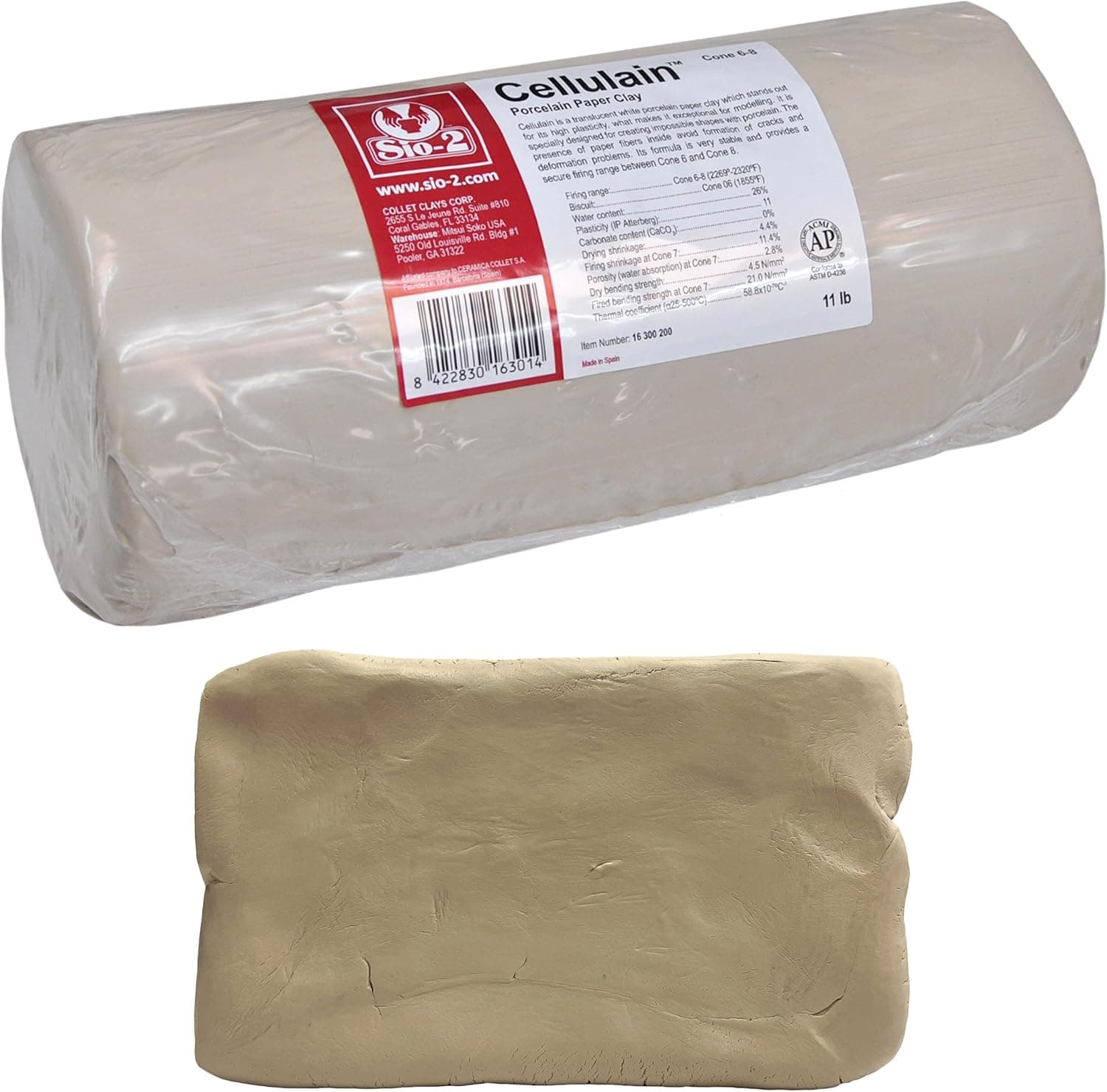
SIO-2 Cellulain high fire paper porcelain clay, 11 lb, Cone 6-8, for thin, strong hand-built and thrown pieces.
Price range: $ (Budget)
What we liked
- + Paper fibers add green strength, so thin pieces crack less while drying
- + 11 lb supply is a good middle size for a porcelain project
- + Paper porcelain can be joined when leather hard more easily
Trade-offs
- - Paper clay can smell if stored wet for a long time
- - Fibers burn out in the kiln, so ventilation during firing matters
Where paper porcelain earns its place over a standard body
Cellulain targets potters who want porcelain's fine, translucent look but keep losing thin pieces to cracking before they even reach the kiln, since the embedded paper fibers add strength to the unfired clay and let complex, delicate shapes hold together while drying. That makes it a strong fit for sculptural hand building, joining separate pieces at the leather hard stage, and any project where plain porcelain's fragility while wet or leather hard has been a repeated frustration. Wheel throwers can use it too, but the real advantage shows up in hand building, where thin walls and intricate joins are exactly where ordinary porcelain most often fails before a single firing happens.
What the paper fiber actually changes about the clay
SIO-2 rates Cellulain to a Cone 6-8 firing range with a Cone 06 bisque step, and the body itself is a translucent white porcelain with cellulose paper fibers blended through it, which is what gives it more green strength than plain porcelain of the same type. Drying shrinkage runs around 4.4 percent, notably lower than a body like Frost porcelain, while firing shrinkage climbs to roughly 11.4 percent once fully vitrified, figures worth tracking if a piece needs to land at a specific finished size. The maker also notes Cellulain has a distinctive final surface texture that looks best left unglazed, which is a different design intent than most porcelains, where a clear or satin glaze is the default finish.
Working with it day to day, from wedging to the kiln
Because the paper fibers burn out entirely during firing, the bisque and glaze firings need decent kiln ventilation, since that burnout releases fumes as the fiber combusts, a detail that matters more here than with a standard clay body. Day to day, an 11 pound bag is enough for a handful of small to medium sculptural pieces or several thrown items, making it a practical size to learn the body's quirks without committing to a large box. One thing to watch for in storage is smell, since paper fiber in a damp, sealed bag for a long stretch can start to develop an odor, so it is worth using the clay at a reasonable pace rather than stockpiling it for months.
How it compares with Frost porcelain and smaller SIO-2 porcelains
Against Laguna's Frost porcelain, sold in both 10 and 25 pound sizes, Cellulain trades some of Frost's smoothness for the crack resistance that paper fiber provides, which matters more for hand builders than for wheel throwers chasing a perfectly smooth surface. SIO-2's own Black Ice and Aneto White porcelains come in smaller 3.5 pound bags at different cone ranges, useful for glaze testing but too limited for a real hand building project the way this 11 pound Cellulain bag is. Aurora Pottery's Best Mix Plus, a stoneware rather than a true porcelain, is not a direct substitute for potters who specifically want porcelain's translucency alongside paper clay's forgiving nature.
Verdict on whether Cellulain fits your next project
Choose Cellulain if hand building thin, detailed, or joined porcelain pieces has meant repeated cracking with a standard body, since the paper fiber's added green strength directly solves that problem. It also suits potters who like the idea of an unglazed, textured porcelain finish rather than a traditional glossy glaze. Skip it if a smooth, fully vitrified surface with maximum translucency is the priority, since plain Frost porcelain will deliver that more directly, or if your kiln setup cannot provide good ventilation during the fiber burnout stage of firing. Wheel throwers focused purely on thrown forms may not need paper clay's crack resistance as much as hand builders do.
Frequently asked questions
What cone does Cellulain porcelain fire to?
SIO-2 rates it for a Cone 6-8 firing range, with a Cone 06 bisque step before the final glaze firing.
Why does paper porcelain crack less than regular porcelain?
The paper fibers mixed into the clay body add green strength while the piece is still wet or leather hard, which is usually when thin or sculptural porcelain pieces are most likely to crack.
Do I need to glaze pieces made from Cellulain?
Not necessarily. The clay develops a distinctive texture that the maker notes looks best left unglazed, though a glaze can still be applied if you prefer a traditional finish.
Does firing this clay require any special precautions?
Good kiln ventilation matters more with paper clay than with standard porcelain, since the embedded paper fibers burn out completely during firing and release fumes as they combust.
Prices change often, so check the current price and availability on Amazon.
Check price on AmazonPottery Nest may earn a commission from the link above.