Orton Pyrometric Cones For Monitoring Ceramic Kiln Firings - Cone 05 (1 Pkg/50) Review (2026)
Updated September 14, 2026 · Research-based review
Our verdict
A 50-pack of Orton large pyrometric cones at Cone 05, the standard way to confirm a kiln actually delivered proper heat-work rather than just reaching a target number on a controller. They are only useful if your clay or glaze targets this specific cone, so check your material's rating first.
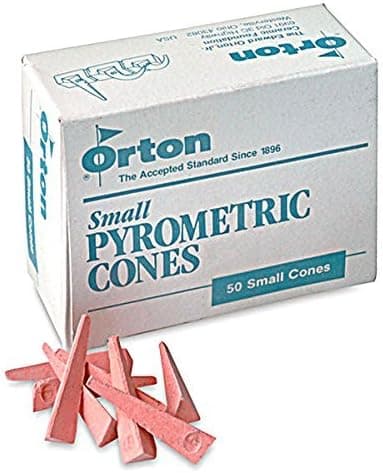
Orton pyrometric cones, Cone 05, 1 Pkg/50, for checking low fire and slightly hotter glaze firings.
Price range: $ (Budget)
What we liked
- + Cone 05 helps confirm low fire glazes matured properly
- + Witness cones show heat work, not just a thermocouple reading
- + 50 cones in a pack keep you supplied for a long time
Trade-offs
- - Only useful if your clay or glaze targets Cone 05
- - Needs to be set in a cone pack at the correct angle
Who needs pyrometric cones
These cones are for potters who want to verify that a firing actually reached proper maturity, not just that a digital controller displayed a target temperature. A kiln's thermocouple measures temperature at one point, but it cannot account for how fast or slow the kiln climbed to that point, and heat-work, the combination of time and temperature, is what actually matures clay and glaze. Cone 05 specifically suits potters and glazes rated for that firing range, often low-fire earthenware or certain glaze lines calibrated to mature around this point. Anyone firing a different cone range, whether lower like cone 06 or higher like cone 6, needs the matching cone number instead, since a cone 05 will not tell you anything useful about a cone 6 firing.
How these cones actually work
Orton manufactures these as large cones, meaning they are sized for placement in a cone pack on a kiln shelf rather than the smaller cones used in a mechanical kiln sitter shutoff device. Each cone is formulated from a controlled blend of ceramic materials engineered to soften and bend at a predictable point relative to accumulated heat-work, not simply at one fixed temperature. Per Orton's published cone chart, a large Cone 05 bends at approximately 1888 degrees Fahrenheit under standard test conditions, though the exact bending point shifts slightly with how fast or slow the kiln is climbing through its final firing stage. The cone tip sagging down to shelf level is the visual signal that the target heat-work has been reached.
Setting up and reading a cone pack
Cones need to be set in a cone pack, typically a small mound of soft clay or a purpose-made holder, at the correct angle, usually around 8 degrees from vertical, so gravity pulls the softening tip downward in a predictable, readable curve rather than folding unevenly. Placing a small series of three cones, one below the target, one at the target, and one above it, gives a clearer picture of the firing than a single cone alone, since you can see whether the kiln under-fired, hit the mark, or overshot. Position cone packs at multiple shelf locations, such as top, middle and bottom, if you want to check for hot or cold spots across the kiln rather than just confirming the overall firing.
Why cones still matter alongside electronic controls
A digital kiln controller is convenient and repeatable, but it only reports the temperature its thermocouple senses, which can drift out of calibration over months of use without an obvious warning sign. Witness cones provide an independent, physical check that does not rely on the same sensor or software the controller uses, which is why many experienced potters still fire cones even in a fully automated electric kiln. Comparing Cone 05 to a nearby option like Cone 06 in the same product line matters here too, since the two are close in temperature but formulated to bend at genuinely different points, so buying the wrong number will not give an accurate read on your actual target firing.
Bottom line
This pack of 50 large Cone 05 cones is a reliable, low-cost way to confirm that a kiln firing actually delivered the heat-work a low-fire clay or glaze needs, independent of whatever a digital controller displays. They are only useful if Cone 05 matches your intended firing range, so double-check the cone rating on your clay bag or glaze bucket before ordering rather than assuming. For any potter serious about consistent, repeatable results, keeping the correct cone number on hand alongside an electronic controller remains good practice, and fifty cones is enough supply for many firings ahead.
Frequently asked questions
At what temperature does a Cone 05 bend?
A large Cone 05 bends at approximately 1888 degrees Fahrenheit under Orton's standard test conditions, though the exact point shifts slightly depending on how fast the kiln is firing near the end of the cycle.
Are these cones for a kiln sitter or for a shelf?
These are large cones meant to be placed in a cone pack on a kiln shelf where you can see them, not the smaller cones used inside a mechanical kiln sitter shutoff device.
Why use cones if my kiln already has a digital controller?
A controller only reports what its thermocouple senses and can drift out of calibration over time, while a witness cone gives an independent physical check that the kiln actually delivered the correct heat-work.
How should I position the cone in my kiln?
Set the cone in a cone pack at roughly an 8 degree angle from vertical so it bends downward in a readable curve, and consider placing packs at multiple shelf positions to check for hot or cold spots.
Prices change often, so check the current price and availability on Amazon.
Check price on AmazonPottery Nest may earn a commission from the link above.