The Potter's Studio Handbook: A Start-to-Finish Guide to Hand-Built and Wheel-Thrown Ceramics by Kristin Muller Review (2026)
Updated September 14, 2026 · Research-based review
Our verdict
Kristin Muller's Potter's Studio Handbook is a 192 page paperback covering both hand building and wheel throwing from setting up a home studio through finished projects like bowls, vases and teapots. It works best as a broad first reference, and readers wanting deep glaze chemistry or advanced throwing will want a second book.
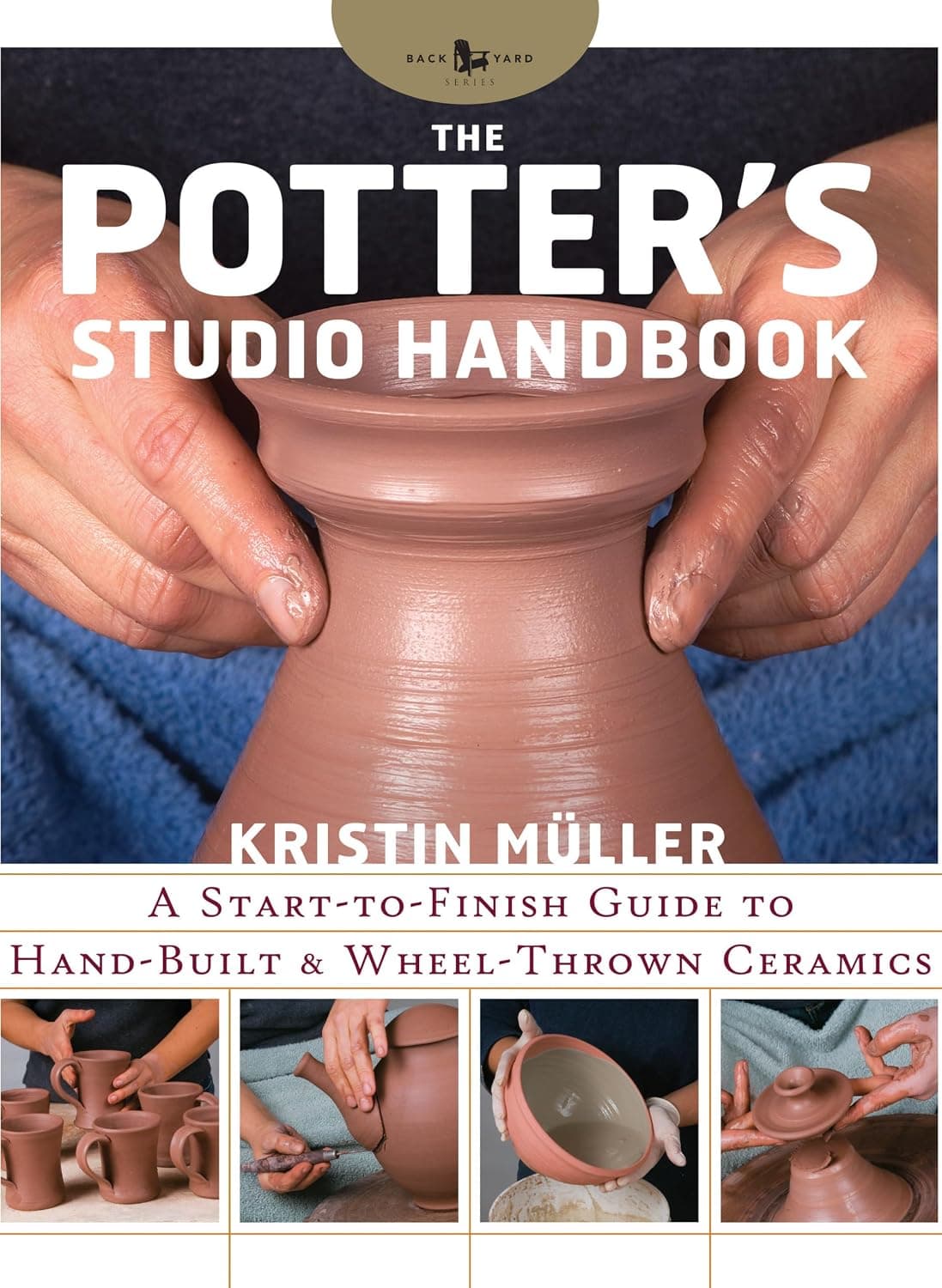
The Potter's Studio Handbook by Kristin Muller, a start-to-finish guide to hand-built and wheel-thrown ceramics.
Price range: $ (Budget)
What we liked
- + Covers both hand building and wheel throwing in one book
- + Start-to-finish approach follows a piece from clay to finished ware
- + Good all-round reference for new home studios
Trade-offs
- - Broad scope means less depth on advanced throwing
- - Readers wanting glaze recipes will need another book
Who this handbook is written for
This is a start-to-finish guide aimed at beginner through intermediate potters setting up their own studio, written by Kristin Muller, a ceramic artist working since 1987 and the education director for Brookfield Craft Center. Rather than focusing only on one technique, the book walks through both hand building and wheel throwing in a single volume, which suits someone deciding which approach fits them or a hobbyist who wants to work both ways depending on the project. It is part of the Studio Handbook Series, positioned as a broad entry point rather than a specialist text, so a total beginner setting up a first home studio is the core reader, alongside anyone teaching a mixed hand building and wheel class who wants one reference for both halves of the course.
What the 192 pages actually cover
The paperback, first published in 2007, runs 192 pages and takes readers from equipping a home studio and choosing materials through preparing clay, building slab and hand-built forms, throwing on the wheel, and finishing pieces with glaze and firing. Projects are sequenced from foundational exercises toward finished functional pieces such as bowls, plates, vases and teapots, using photographed step sequences that show hands shaping clay at each stage rather than only text description. The structure follows the full arc of making a piece from raw clay to a fired, finished object, which is the start-to-finish promise in the title, and includes troubleshooting notes for the common problems beginners run into at each stage of the process.
How it works as a studio reference
Because the book pairs photo sequences with numbered steps, it works well propped open on a studio table while you follow along at the wheel or slab table, rather than as something you read cover to cover once and shelve. The dual coverage of hand building and wheel throwing means a single household or classroom copy can serve two different techniques instead of buying separate books for each, which is useful for someone still deciding which method they prefer. Readers should expect an introductory to intermediate depth throughout, since covering both major techniques in under 200 pages means neither gets the exhaustive treatment a dedicated single-technique book would offer.
Trade-offs and how it compares with other pottery books
Because it splits its pages between hand building and wheel throwing, this handbook goes less deep on advanced wheel technique than a book dedicated entirely to the wheel, such as Julia Claire Weber's Beginner's Guide to Wheel Throwing or Ben Carter's Mastering the Potter's Wheel, both of which can spend far more pages on centering, pulling and trimming alone. It also does not function as a glaze recipe book, so readers wanting formulas and firing data for custom glazes will need a dedicated glaze reference alongside it rather than expecting that depth here. What it offers instead is breadth, a single reference that gets a beginner from an empty room to a finished, glazed piece using either technique.
Verdict and who should pick a different book
Pick this handbook if you want one broad reference that covers setting up a studio, hand building and wheel throwing together, and if you value a start-to-finish structure with photographed steps over exhaustive depth on a single technique. Choose a dedicated wheel-throwing title instead if you already know you only want to throw and are ready for more advanced centering and trimming instruction than a shared-technique book can offer, or a dedicated glaze book if formulas and firing schedules are your priority. As a first pottery book for a new home studio, its broad start-to-finish structure earns our score of 8.6 out of 10 for being genuinely useful at every stage from setup to a finished piece.
Frequently asked questions
Does this book cover both wheel throwing and hand building?
Yes, it covers both techniques in one volume, from setting up a studio through finished projects, rather than focusing on only one method.
How many pages is The Potter's Studio Handbook?
The paperback edition runs 192 pages, first published in 2007.
Does the book include glaze recipes?
It covers glazing and firing as part of the finishing process but is not a dedicated glaze recipe book, so readers wanting detailed formulas should pair it with a glaze-focused reference.
Is this book suitable for complete beginners?
Yes, it is written as a start-to-finish guide for beginner through intermediate potters setting up a home studio for the first time.
Prices change often, so check the current price and availability on Amazon.
Check price on AmazonPottery Nest may earn a commission from the link above.