The Beginner's Guide to Wheel Throwing: A Complete Course for the Potter's Wheel by Julia Claire Weber Review (2026)
Updated September 14, 2026 · Research-based review
Our verdict
The Beginner's Guide to Wheel Throwing by Julia Claire Weber is a structured course-style book for potters just starting out on the wheel. It walks through studio basics, clay choice and centering methods with clear photos, but experienced throwers and dedicated hand builders will find its scope too introductory to hold their interest.
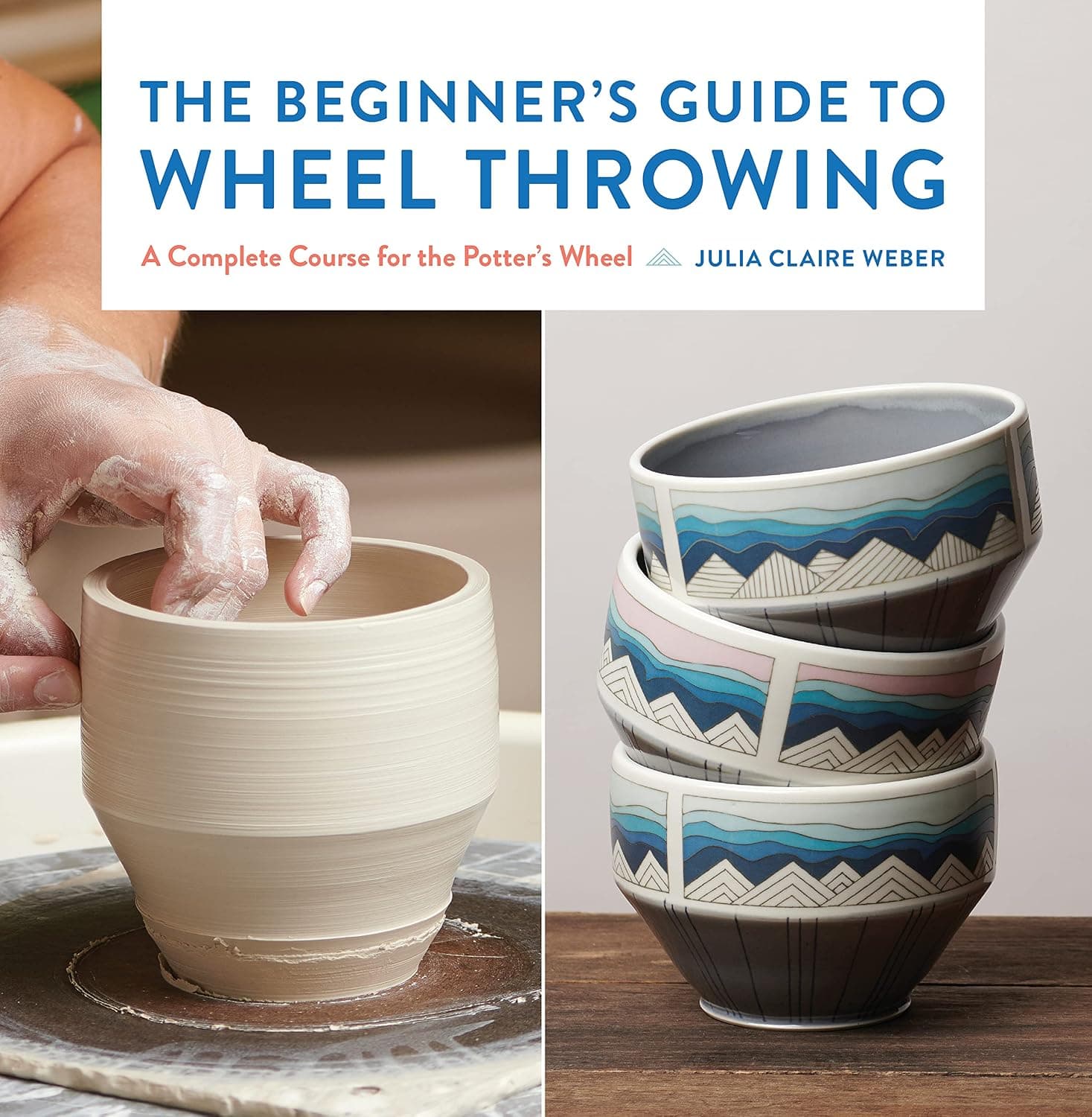
The Beginner's Guide to Wheel Throwing by Julia Claire Weber, a complete course for learning the potter's wheel.
Price range: $ (Budget)
What we liked
- + Structured as a complete course, so beginners know what to learn next
- + Wheel focus matches the needs of new throwers
- + Clear beginner framing reduces early frustration
Trade-offs
- - Experienced potters may find much of it too basic
- - Hand building is outside its main scope, so slab fans need more
Who this book is written for
This is the first volume in Quarto's Essential Ceramics Skills series, and the publisher pitches it as a friendly, contemporary take on the classic wheel-throwing manual aimed at new and returning ceramic artists. It opens with a tour of a typical ceramics studio and a discussion of clay choice before moving into centering methods, which is exactly the order a total beginner needs rather than assuming prior studio time. That structure makes it a strong match for someone taking up pottery for the first time, or a returning hobbyist who wants a refresher after years away from the wheel, rather than a reference for someone already comfortable centering and pulling walls. Its title and framing make clear this is a course to work through from the start, not a technique reference to dip into out of order.
What the book actually covers
According to the publisher, the book covers the fundamentals of setting up and using a home studio, several different centering methods rather than just one default approach, and moves through slip decoration, glazing and firing as reference sections for a novice ceramicist. Reviewers describe it as featuring clearly presented color photographs paired with concise instructions, which matters for a physical skill like wheel throwing where seeing hand position is often more useful than reading about it. The book is sold in paperback, hardcover and Kindle editions, giving buyers a choice between a studio-friendly paperback that can take some clay dust and a digital copy for reference on a phone or tablet near the wheel. Its scope stays focused on wheel throwing specifically rather than trying to cover hand building or sculpture in the same depth.
Working through the course in a real studio
A course-structured book like this is best used the way it is designed, worked through roughly in order alongside wheel time, rather than treated as a lookup reference for one specific problem. Covering multiple centering methods rather than a single approach is a genuinely useful choice for beginners, since different body types and wheel setups suit different centering techniques, and a single-method book can leave a struggling student without an alternative to try. The later sections on slip decoration, glazing and firing round out the course so a beginner has a rough map of the entire process from wet clay to finished piece, even if those sections are necessarily less deep than a book dedicated entirely to glaze chemistry or firing schedules would be.
How it compares with other pottery books
Against Kristin Muller's Potter's Studio Handbook, which covers both hand-built and wheel-thrown ceramics in one start-to-finish guide, Weber's book is narrower but goes deeper specifically on the wheel, which suits a reader who already knows they want to throw rather than explore both techniques. Compared with Ben Carter's Mastering the Potter's Wheel, which leans toward tips and troubleshooting for potters already past the absolute basics, this book sits earlier in a learning path, making the two reasonable companions rather than direct competitors. Stuart Carey's From Clay to Kiln covers similar beginner wheel territory, so the choice between the two often comes down to which author's photography and teaching style a reader responds to more, since both aim at the same audience and stage of skill.
Bottom line
The Beginner's Guide to Wheel Throwing earns our score of 8.9 out of 10 as a clearly structured, well photographed course book that does what it sets out to do for someone new to the potter's wheel. Its narrow, wheel-focused scope is the right call for its intended reader but does mean experienced potters or dedicated hand builders should look elsewhere for material that challenges them. Buyers should treat it as a course to work through alongside actual wheel time rather than a reference book to skim, since its value comes from following the centering methods and studio setup guidance in order. For a first pottery book bought alongside a beginner wheel throwing class or a new home wheel, it is a sound, low-risk choice.
Frequently asked questions
Is this book good for absolute beginners?
Yes, it is structured as a complete beginner course, starting with studio setup and clay choice before moving into centering, glazing and firing, which suits someone new to the potter's wheel.
Does this book cover hand building as well as wheel throwing?
No, its main focus is wheel throwing specifically, so potters mainly interested in hand building or slab work will find more depth in a book that covers both techniques.
What formats is the book available in?
It is sold in paperback, hardcover and Kindle editions, giving buyers a choice between a studio-friendly print copy and a digital version for reference near the wheel.
Is this book useful for experienced potters?
It is aimed squarely at beginners and returning hobbyists, so potters who already throw comfortably will likely find most of the content too basic to be worth revisiting.
Prices change often, so check the current price and availability on Amazon.
Check price on AmazonPottery Nest may earn a commission from the link above.