The Original DiamondCore Tools: 4-Pack Pottery Carving Tool Set P11, P19, FP1, X2 - Clay Carving, Sgraffito, Relief Fluting (Set 2) Review (2026)
Updated September 14, 2026 · Research-based review
Our verdict
This DiamondCore four-tool set pairs a wide V-tip, a fine square-tip, a micro U-tip and a fluting blade for potters doing detailed sgraffito and carving work. The stainless steel blades hold a sharp edge for clean lines, but the price and specialized shapes make it a better fit for carving-focused work than general clay modeling.
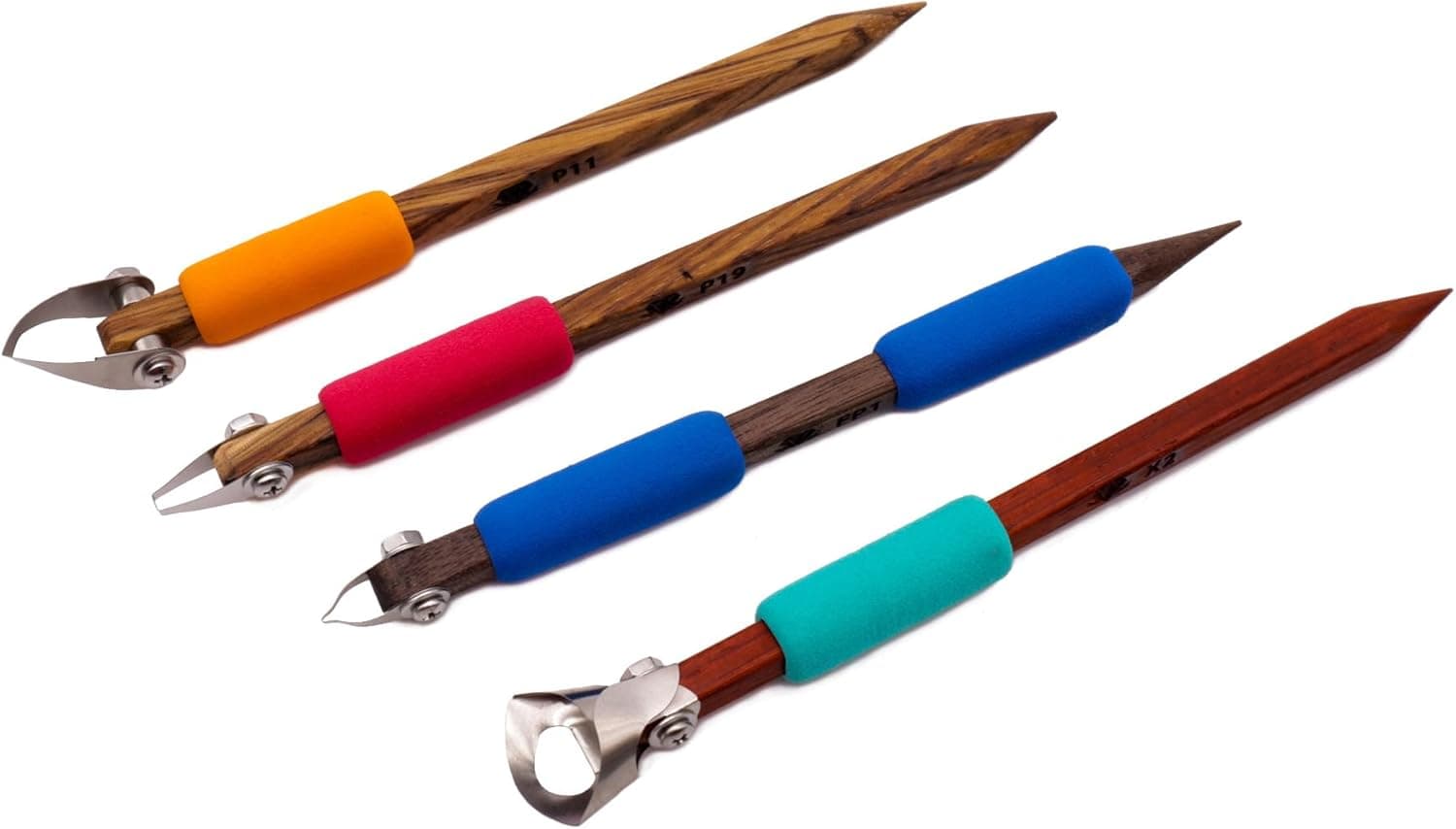
DiamondCore Tools' 4-Pack carving set 2 with P11, P19, FP1 and X2 for sgraffito, relief and fluting on clay.
Price range: $ (Budget)
What we liked
- + DiamondCore tools are known for sharp, precise sgraffito lines
- + P11, P19, FP1 and X2 cover carving, relief and fluting jobs
- + Premium tips cut clean lines without dragging leather hard clay
Trade-offs
- - Premium set costs much more than generic carving kits
- - Specialized tips suit carving more than general modeling
Who this carving set is for
This four-tool set from DiamondCore Tools is built for potters who already carve, incise or flute their work and want a more capable set of blades than a generic starter kit provides, rather than for someone just learning to center clay or build basic forms. Each tool in the set, the P11, P19, FP1 and X2, is a dedicated single-purpose blade rather than a multi-tool, which suits an intermediate or advanced potter who knows which cuts they need and wants tools sized for that job. It fits sgraffito work, where a design is carved through a layer of underglaze or slip, as well as relief carving and fluting on leather-hard or bone-dry clay.
What each of the four tools actually does
The P11 has a 12 millimeter curved wide V-tip meant for carving broad, precise V-shaped grooves and wide sgraffito lines, while the P19 is a narrower 3 millimeter square-tip built for shallow, controlled cuts with clean square edges, useful for finer detail work than the P11 can manage. The FP1 is the most specialized tool in the set, an ultra-fine 1 millimeter U-tip meant for micro detailing, carving through underglaze, and working in tight spots a wider blade cannot reach. The X2 rounds out the set with a 12 millimeter U-tip fluting blade for smooth, U-shaped grooves with clean convex walls, the kind of cut used for decorative fluted ridges on the side of a thrown or hand-built piece.
Handling and using the tools day to day
Each tool has a 5.5 inch hardwood, pencil-style handle, which keeps the grip familiar across the set so switching between the four blades mid-project does not require adjusting to a different handle shape each time. The blades are stainless steel, a material chosen because it keeps an edge through repeated use on leather-hard or bone-dry clay without dulling as quickly as softer metal tools can, which matters for sgraffito work where a dull edge drags and tears the clay instead of cutting a clean line. Because these are precision carving tools rather than all-purpose modeling tools, they work best on clay firm enough to hold a crisp line, and they are not meant to replace wire tools or ribs for shaping soft, wet clay.
Set 2 versus cheaper multi-tool kits
Against a large generic kit like a 30 piece clay tool set that bundles dozens of basic shapes for a lower total cost, this four-tool DiamondCore set covers far fewer shapes but each blade is purpose-built and holds an edge better, which matters more to someone doing repeated detailed carving than having dozens of rarely used tools in a drawer. It is also priced well above those bulk sets, reflecting the more specialized manufacturing and materials rather than a stamped multi-tool blank. A potter who mostly does general hand-building or basic trimming will likely get more use out of a broader, cheaper set, while someone focused specifically on sgraffito and carved detail is the target buyer for this set.
Verdict and who should pick a broader set
This set is a good pick for a potter who already carves or does sgraffito regularly and wants dedicated, sharp tools for wide grooves, fine detail, micro work and fluting rather than a single multi-purpose blade. It is not the right first purchase for a total beginner, who would get more practical value from a broad starter kit covering shaping, trimming and basic carving in one purchase at a lower cost. For an intermediate or advanced potter narrowing in on carved surface decoration as a focus, though, the specialization and edge retention of these four blades are the whole point.
Frequently asked questions
What kind of clay should I use these tools on?
They are built for leather-hard or bone-dry clay, the firmness typically used for carving, sgraffito and fluting work.
What blade material do these tools use?
The blades are stainless steel, chosen to hold a sharp edge through repeated carving.
Is this set good for a complete beginner?
It is more suited to a potter who already carves or does sgraffito, since a broader starter kit will cover more general tasks for a beginner.
What is the difference between the P11 and P19 tools?
The P11 is a wider 12 millimeter V-tip for broad grooves, while the P19 is a narrower 3 millimeter square-tip for shallower, more controlled cuts.
Prices change often, so check the current price and availability on Amazon.
Check price on AmazonPottery Nest may earn a commission from the link above.