EQCOTWEA Manual Ceramic Clay Slab Roller, 28x17.7in Adjustable Pottery Making Ceramic Clay Print Machine, with Iron Frame, Max 1.77in Pressable Thickness Review (2026)
Updated September 14, 2026 · Research-based review
Our verdict
EQCOTWEA's manual slab roller uses an iron frame and a large hand crank to flatten clay up to 1.77 inches thick across a 28 by 17.7 inch table, giving a home studio wheel-free access to consistent slabs for platters, boxes and tiles. It needs a dedicated bench, and canvas setup still takes practice to avoid sticking.
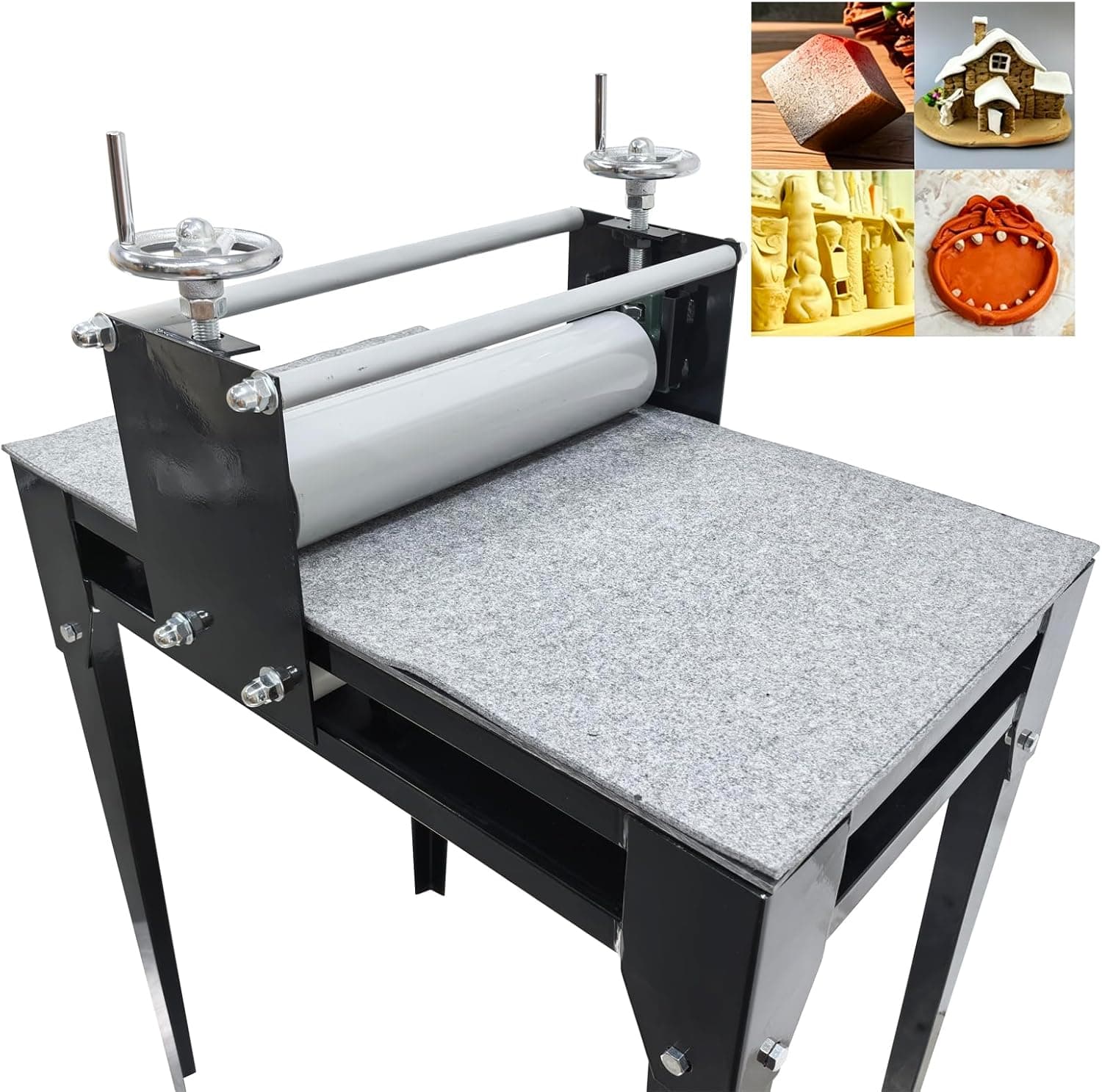
EQCOTWEA's manual 28x17.7in iron-frame slab roller with adjustable thickness up to 1.77in for ceramic slab building.
Price range: $ (Budget)
What we liked
- + 28x17.7in table fits large slabs for platters, boxes and tile runs
- + Iron frame resists flexing when rolling firm clay
- + Adjustable thickness lets you switch from thin tiles to chunky slabs
Trade-offs
- - Big tabletop machine needs a dedicated workbench to use comfortably
- - Canvas and setup care matter, or clay can stick and tear on rolling
Who needs a tabletop slab roller
A slab roller earns its keep for potters who regularly build platters, tile runs, boxes or other slab-based forms rather than working exclusively on the wheel, since rolling clay to a consistent thickness by hand with a rolling pin is slow and rarely even across a full sheet. This EQCOTWEA model is a manual, no-electricity design with a 28 by 17.7 inch table, sized for platters and multi-tile projects rather than tiny jewelry-scale pieces, and its iron frame is built to resist flexing under the pressure of rolling firmer clay bodies. It fits a home studio or small production setup better than an apartment crafter with limited bench space, since a table this size needs a dedicated spot to live.
How the roller and frame work
The machine uses a large handwheel turned by hand to draw clay between rollers set on an iron frame, with a dual wheel control design and adjustable thickness up to 1.77 inches, so you dial in a setting depending on whether you want thin tile stock or a thicker slab for a sculptural piece. Because there is no motor, the roller runs quietly and needs no power outlet nearby, which matters in a shared studio or a garage setup without accessible wiring. The frame and panel are built to be disassembled and moved, which helps if the roller needs to be stored between projects or shared across a class rather than living permanently on one bench.
Setting it up and using it well
Getting clean, even slabs from any manual roller depends on setup as much as the machine itself, since canvas needs to be placed correctly on both sides of the clay to stop it sticking to the table and rollers, and clay that is too wet or too stiff will tear or resist rolling evenly regardless of the frame quality. Because the table is a fixed 28 by 17.7 inches, larger single-piece projects still need to be pieced together from multiple passes or joined slabs. The manual crank means rolling a thick slab down to a thin tile setting takes several passes rather than one, so budget extra time compared with an electric roller if you are processing a lot of clay in one session.
Trade-offs and how it compares
Against the INTSUPERMAI slab roller with its larger 33.86 by 20.08 inch table, this EQCOTWEA unit trades some table size for a more compact footprint that suits a smaller studio bench, while both share a similar manual, no-power operating style and roughly the same 1.77 inch maximum thickness. Compared with a simpler pin-and-slat style slab roller like the OUTPOST POTTERY option, which relies on a hand-cranked wire cutter setup rather than a geared roller mechanism, this EQCOTWEA machine offers finer, repeatable thickness control at the cost of needing more bench space and a heavier standalone unit.
Verdict and who should pick differently
This roller makes sense for a home studio or small production setup that regularly needs consistent slabs for platters, boxes or tile work and has the bench space to dedicate to a tabletop machine. Choose the larger INTSUPERMAI table instead if you frequently need wider single slabs and have the room, or a simpler pin-and-slat roller if your budget is tighter and occasional smaller slabs are enough. For anyone moving beyond rolling pin slabs into serious slab building, the even thickness control here is a real upgrade worth the bench space it asks for.
Frequently asked questions
Does this slab roller need electricity to run?
No, it is a fully manual machine operated with a hand crank, so it needs no power outlet and runs quietly.
How thick can clay slabs be rolled with this machine?
The adjustable thickness setting goes up to about 1.77 inches, covering everything from thin tile stock to thicker sculptural slabs.
Do I need canvas to use this roller?
Yes, canvas placed on both sides of the clay is standard practice with slab rollers to keep clay from sticking to the table and rollers during rolling.
Can the roller be taken apart for storage?
Yes, the frame and panel are designed to disassemble, which helps if you need to store it between projects or move it around a shared studio.
Prices change often, so check the current price and availability on Amazon.
Check price on AmazonPottery Nest may earn a commission from the link above.