Penguin Pottery - Darvan 7 - Dispersion Agent - Deflocculant - Sodium Silicate Substitute - Will Not Erode Plaster Molds - 16 oz Review (2026)
Updated September 14, 2026 · Research-based review
Our verdict
Penguin Pottery's Darvan 7 thins casting slip and extends glaze life without the plaster mold erosion that sodium silicate causes over repeated pours. It works best on porcelain and high-iron clays specifically, so stoneware casters may prefer Darvan 811, and precise measuring still matters either way.
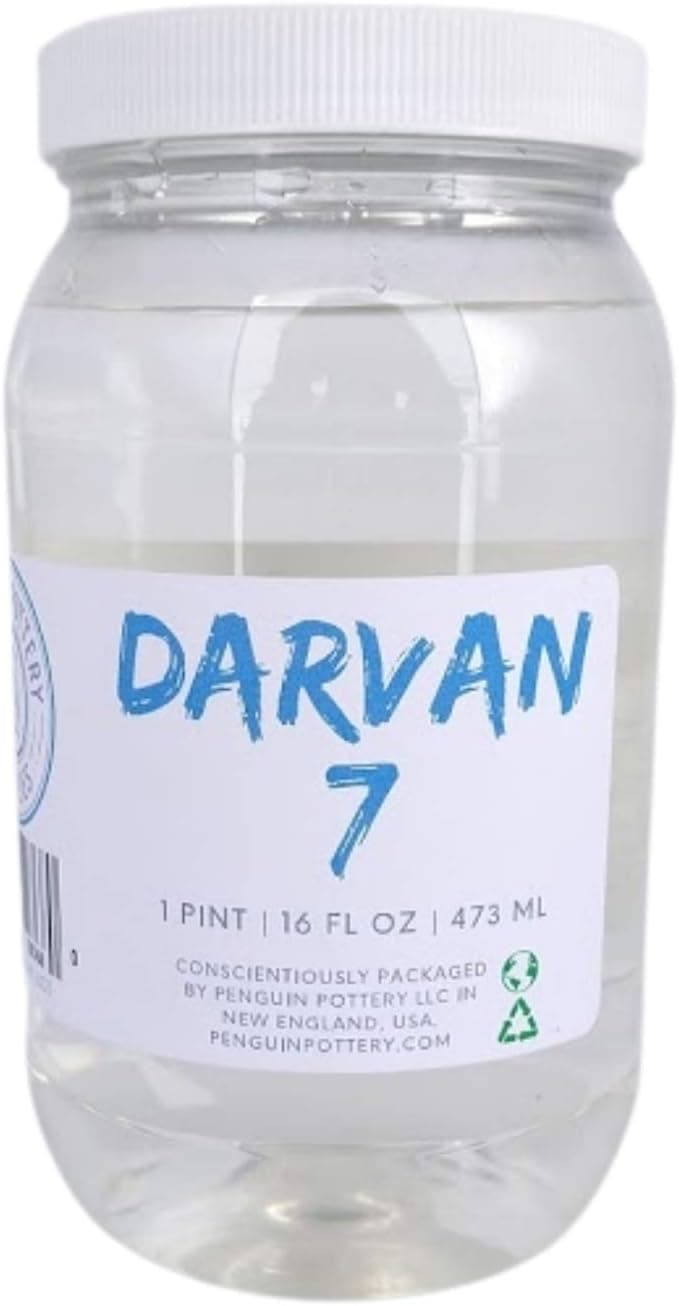
Penguin Pottery's 16 oz Darvan 7 dispersion agent, a sodium silicate substitute that will not erode plaster molds.
Price range: $ (Budget)
What we liked
- + Gentler on plaster molds than sodium silicate, so molds last longer
- + 16 oz bottle is a practical size for regular slip mixing
- + Clear labeling as a sodium silicate substitute helps beginners choose
Trade-offs
- - Still needs careful measuring, since over-deflocculated slip misbehaves
- - Costs more than basic sodium silicate for the same thinning job
Why potters reach for a deflocculant instead of just adding water
Casting slip needs to be thin enough to pour into a plaster mold but too much added water ruins the clay-to-water ratio and weakens the cast piece, which is exactly the problem a deflocculant like Darvan 7 solves. It works by weakening the electrical attraction between clay particles so the slip stays fluid and pourable while keeping the solids ratio high, rather than by simply diluting the mix. This matters most for anyone doing slip casting into plaster molds, mixing their own porcelain or glaze slip from dry materials, or maintaining a stock of casting slip that keeps thickening on the shelf over time. It is a specialty additive, not a general studio product, so it mainly suits potters already set up for mold work.
What Darvan 7 actually does better than sodium silicate
Darvan 7 is chemically similar in function to sodium silicate but does not erode plaster the way sodium silicate does with repeated use, since plaster molds gradually absorb and deteriorate under sodium silicate exposure over many casting cycles. That single difference is the main reason potters switch, since a mold that lasts through more pours before it needs replacing saves real time and money over a mold-heavy production run. Darvan 7 is also described as less sensitive to over-flocculation than sodium silicate, meaning small measuring errors are somewhat more forgiving, though careful measuring still matters since an over-deflocculated slip can misbehave regardless of which deflocculant caused it.
Where it works best and where it falls short
Darvan 7 is specifically suited to porcelains and high-iron clay bodies, and the maker notes that Darvan 811, a related but different product, performs better for stoneware and high-fire slips. That is an important distinction for anyone assuming one deflocculant works equally well across every clay type, since reaching for plain Darvan 7 on a stoneware slip may not give the same results it gives on porcelain. It also functions purely as a dispersing agent and will not stop glaze from settling in storage, so a potter who wants a glaze that stays suspended between uses should pair Darvan 7 with a suspension agent like Epsom salts rather than expecting it to do both jobs alone.
Handling, storage, and how it fits against premade casting slip
The maker states Darvan will be damaged if frozen, so cold-weather shipping and storage need some care, and the product carries roughly a two year shelf life under normal conditions. Because this bottle is the additive rather than a finished slip, it is really competing against premade casting slips like AMACO's No. 15-S or No. 1 Porcelain Slip in a different way, buying Darvan 7 means mixing your own slip from dry clay and water rather than pouring a ready-made gallon straight from the container. That trade-off rewards potters who already have a reliable clay recipe and want control over their slip's exact composition over the convenience of a premixed AMACO slip.
Bottom line for slip casters deciding what to buy
Choose Darvan 7 if you are casting porcelain or high-iron clay into plaster molds and want your molds to last through more pours than sodium silicate would allow, and if you already have a slip recipe you mix yourself rather than needing a premade option. Stoneware slip casters should look at Darvan 811 instead, since the maker specifically points to that formula as the better fit for stoneware and high-fire work. Beginners who just want a ready-to-pour slip without mixing their own should start with a premade casting slip like AMACO's, then move to Darvan 7 once they are ready to formulate their own mix and want finer control over consistency and mold life.
Frequently asked questions
How is Darvan 7 different from sodium silicate for slip casting?
Both thin casting slip, but Darvan 7 does not erode plaster molds the way sodium silicate does over repeated pours, so molds tend to last longer, and it is also somewhat less sensitive to measuring errors.
Will Darvan 7 keep my glaze from settling in storage?
No, it works purely as a dispersing agent and does not prevent settling, so if you need a glaze to stay suspended you should add a suspension agent like Epsom salts alongside it.
Does Darvan 7 work equally well on any clay body?
It is best suited to porcelain and high-iron clays specifically. For stoneware and high-fire slips, the maker points to Darvan 811 as the better performing option.
How should I store this product?
Keep it from freezing, since the maker states the product will be damaged if it freezes, and use it within roughly its two year shelf life for best results.
Prices change often, so check the current price and availability on Amazon.
Check price on AmazonPottery Nest may earn a commission from the link above.