Penguin Pottery - Sodium Silicate for Pottery, Deflocculant, Liquid Glass, Waterglass, High Temperature Sealant (16 fl.oz / 473 ml) Review (2026)
Updated September 14, 2026 · Research-based review
Our verdict
This 16 fluid ounce sodium silicate bottle is the concentrate behind magic water for joining clay, and it doubles as a classic casting slip deflocculant. Small amounts go a long way, so the bottle lasts many batches, but it is alkaline and calls for gloves, and repeated use in plaster molds gradually erodes the mold.
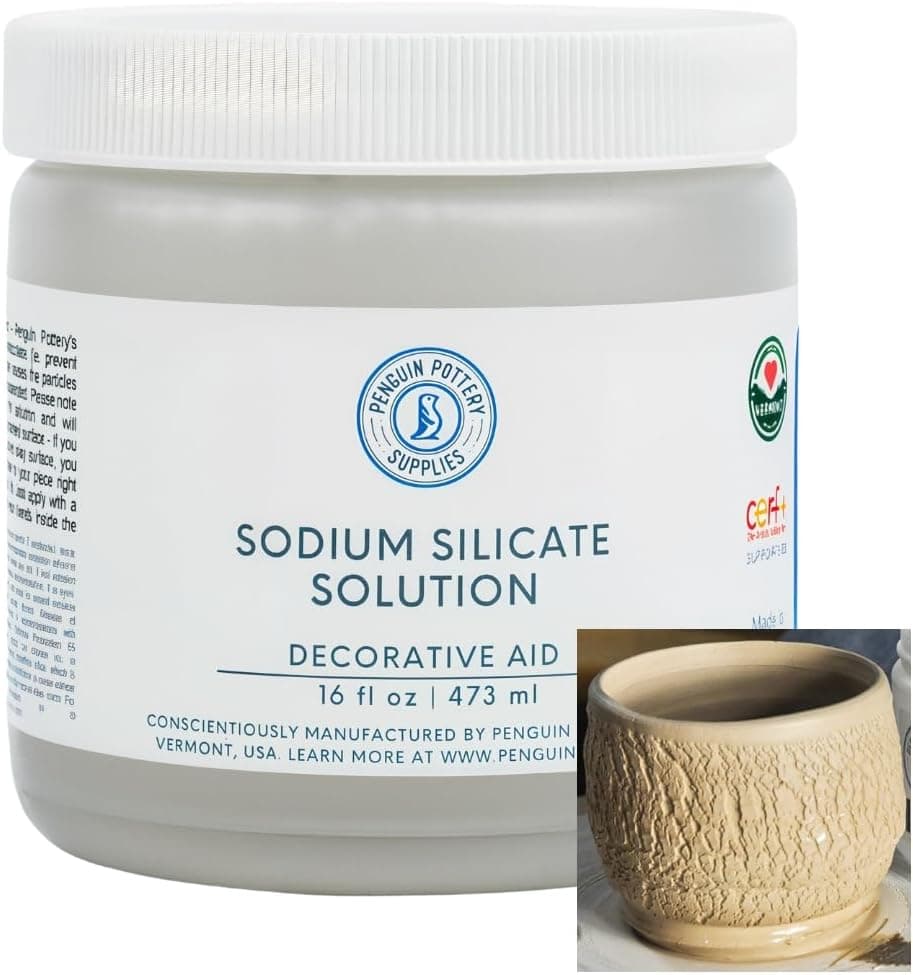
Penguin Pottery's 16 fl.oz / 473 ml sodium silicate, a liquid glass deflocculant and sealant for magic water and slip.
Price range: $ (Budget)
What we liked
- + Key ingredient for mixing magic water to join and repair clay
- + Also thins casting slip as a classic deflocculant
- + 16 fl.oz bottle covers many batches since only small amounts are used
Trade-offs
- - Alkaline liquid needs gloves and careful handling
- - Can harden plaster mold surfaces if used for casting slip long term
What this bottle actually solves in a pottery studio
Sodium silicate is the key ingredient in magic water, the thin, deflocculated slip potters use to join fresh clay to leather hard clay without the joint cracking or separating during drying and firing, and this 16 ounce bottle is a concentrated source of it rather than a premixed magic water product. It also works the traditional way, as a deflocculant that thins casting slip and keeps clay particles suspended and repelling one another instead of clumping, which is useful for anyone mixing their own slip for mold work. Because only small amounts are needed per batch, this single bottle covers a meaningful number of joining sessions or slip batches rather than being a one-project consumable.
How sodium silicate actually works on clay particles
As a deflocculant, sodium silicate causes clay particles suspended in water to repel each other electrically rather than clump together, which keeps a slip thin and pourable at a lower water content than plain water dilution would allow. For magic water specifically, that same thinning effect creates a slip loose enough to brush onto a join without adding so much water that the joint weakens the surrounding clay. Beyond joining and casting slip, sodium silicate can also be brushed onto leather hard clay to produce a decorative crackled surface texture before firing, and it is heat resistant enough to bond fiberglass sheeting in raku kiln construction, which is a niche but real secondary use for potters building their own equipment.
The trade-off with plaster molds and safe handling
The main drawback shows up with repeated use in plaster molds, since plaster gradually absorbs sodium silicate solution over time, which leads to deterioration and erosion of the plaster surface across many casting cycles. That is the direct trade-off against a plaster-friendlier deflocculant like Darvan 7, which is formulated specifically to avoid that erosion. Sodium silicate is also an alkaline solution, so gloves and careful handling are worth using to avoid skin irritation during mixing and application, and like many liquid ceramic additives it should be kept from freezing in storage, since cold temperatures can damage the solution.
Where it fits next to slip trailer bottles and other joining tools
Guides on clay slip and magic water often group this product alongside slip trailer bottles and applicator sets like Frienda's precision tip bottles or Gaunt Industries' HYPO applicator set, but those are actually a different category of tool, the bottles and tips used to apply slip or magic water precisely rather than the sodium silicate itself. In practice, this bottle is what goes into a slip trailer or applicator, not a competitor to one, so potters often end up owning both a sodium silicate source like this and a dedicated applicator bottle for controlled, precise joining work rather than choosing one over the other.
Verdict on whether this bottle belongs in your studio
This is a sensible pick for any potter who regularly joins handles, coils, or added elements to leather hard pieces and wants a reliable magic water ingredient on hand, and it doubles usefully as a classic slip deflocculant for anyone mixing casting slip from scratch. Studios doing heavy plaster mold casting should weigh the long-term plaster erosion against Darvan 7's gentler profile before standardizing on sodium silicate for that specific job. Anyone new to it should handle it with gloves given its alkalinity, and pair it with a dedicated slip trailer bottle for precise application rather than expecting this bottle alone to double as an applicator.
Frequently asked questions
What is magic water and how does this product make it?
Magic water is a thin, deflocculated slip used to join clay pieces without weakening the joint, and sodium silicate is the ingredient that thins the slip enough to work well for that job.
Does sodium silicate damage plaster casting molds?
Yes, with repeated use plaster gradually absorbs the solution, which leads to erosion and deterioration of the mold surface over many casting cycles, more so than an alternative like Darvan 7.
Do I need any safety gear to use this?
It is an alkaline solution, so wearing gloves during mixing and application is a sensible precaution to avoid skin irritation.
Does this bottle come with an applicator for precise joining work?
No, this is the sodium silicate concentrate itself, so pairing it with a separate slip trailer bottle or applicator set gives more control for precise joining than pouring it straight from this bottle.
Prices change often, so check the current price and availability on Amazon.
Check price on AmazonPottery Nest may earn a commission from the link above.