YaeTek 12" Sculpting Pottery Wheel Decorating Banding Heavy Cast Iron Metal Construction Joint with Ball Bearings Non-Skid Rubber Boot Review (2026)
Updated September 14, 2026 · Research-based review
Our verdict
YaeTek's 12 inch banding wheel is a heavy cast iron turntable for decorating and sculpting rather than throwing. Its weight, which makes it stable under tall pieces, also makes it awkward to carry between rooms. For a spot where it can stay put, the smooth bearing spin and non-skid base make it easy to trust with top-heavy work.
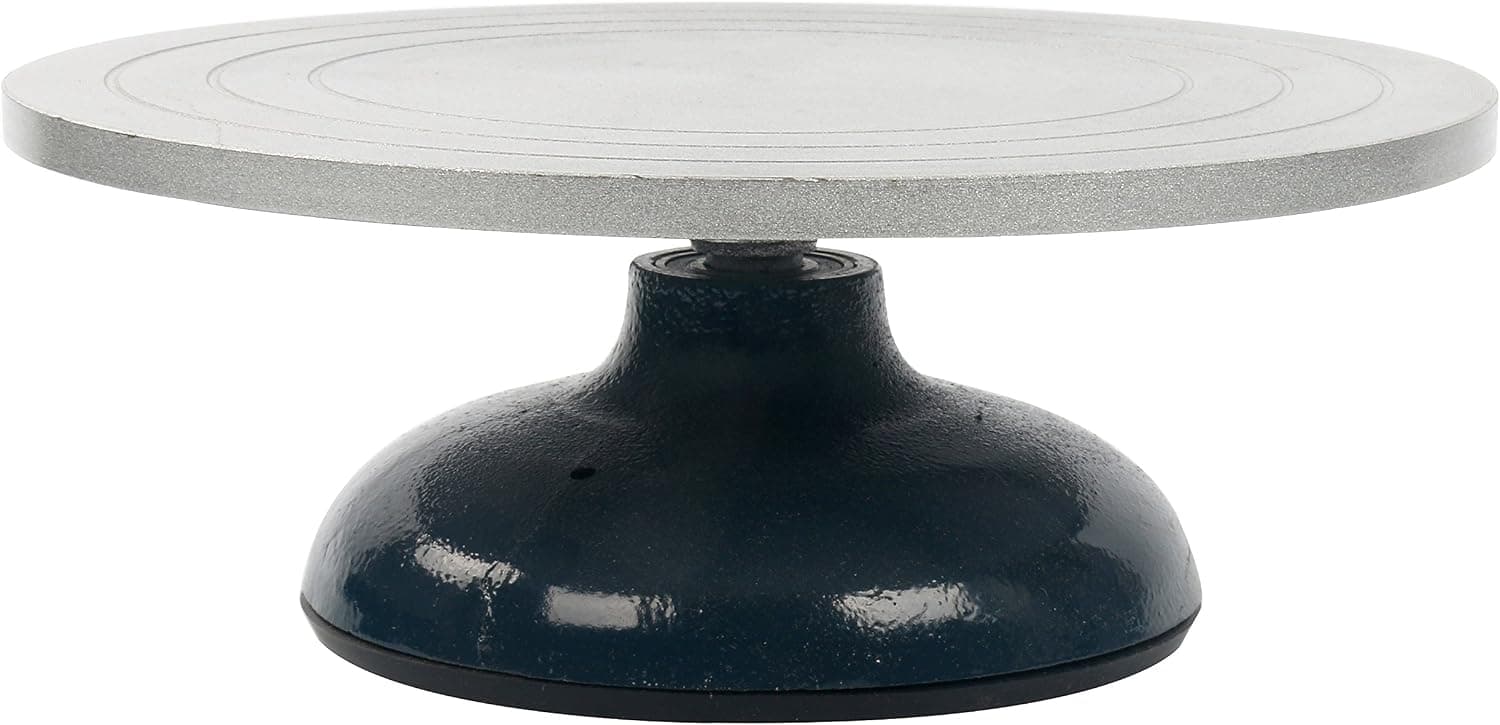
YaeTek's 12" heavy cast iron banding wheel with ball bearings and non-skid rubber boot for decorating and sculpting.
Price range: $ (Budget)
What we liked
- + Heavy cast iron base resists tipping even with tall, top-heavy pieces
- + Ball bearings let the top coast smoothly for even glaze lines
- + Non-skid rubber boot protects tables and stops the wheel sliding
Trade-offs
- - Cast iron is very heavy, so carrying it to classes is a chore
- - Iron parts can rust if left wet, so dry the wheel after cleaning
What a banding wheel is for
A banding wheel, sometimes called a decorating wheel or sculpting stand, is a rotating platform used for glazing, carving, adding handles, and general hand building rather than for throwing clay on the wheel. YaeTek's 12 inch version is aimed at potters and sculptors who need a stable, freely spinning surface to work around a piece from every angle without lifting or repositioning it constantly. The 12 inch top is large enough for platters, vases, and mid-sized sculptural work, more space than the smaller 7 inch banding wheels common for jewelry-scale pieces. Anyone looking for a wheel to actually throw clay on needs a motorized pottery wheel instead, since this is a manual, hand-spun turntable built purely for decorating and shaping work.
Cast iron build and how it spins
The base and body are heavy cast iron metal construction, which is the main reason this wheel earns strong marks for stability, since a heavier base resists tipping when a tall or unevenly weighted piece sits off-center on the top plate. Ball bearings sit at the joint between the base and the spinning top, giving a smooth, low-friction rotation that keeps glaze lines and banding decoration even rather than jerky. A non-skid rubber boot underneath keeps the whole wheel from sliding across a worktable while you work, which matters more than it sounds once you are pressing a carving tool into clay with one hand while spinning the wheel with the other.
Living with the weight
Cast iron construction is a real trade-off. The same heft that keeps the wheel planted on a table makes it a poor choice for a mobile cart or a classroom that needs to store and redistribute banding wheels between sessions. It is best treated as a fixed station piece, set up at one spot in the studio rather than something carried to a class or a community table each week. Iron parts can also rust if left wet, so wiping the base and joint dry after a glazing session, rather than letting slip or water sit on the metal, keeps the bearings turning smoothly for years instead of seizing up or developing surface rust around the joint.
How it compares with lighter banding wheels
Against aluminum alloy alternatives like the Yncotte 7 inch double-sided wheel, YaeTek's cast iron 12 inch version is heavier, larger, and noticeably more stable under a tall or lopsided piece, but it gives up the portability that a lighter aluminum wheel offers. Compared with similarly built cast iron 7 inch wheels, such as MYFULLY's version with the same non-skid boot and ball bearing design, the extra top diameter here matters most for larger platters, bowls, and sculpture where a smaller 7 inch surface would feel cramped. If most of your work is small scale jewelry or ornament decorating, a compact 7 inch wheel is easier to store and move, but for bigger studio pieces the larger cast iron top earns its keep.
Verdict
For a home studio or workspace with a dedicated spot for it, this 12 inch cast iron banding wheel is a durable, stable tool that earns its our score of 9.0 out of 10 through sheer build quality, smooth ball bearing rotation, and a top plate large enough for real studio work. The trade-off is carrying weight and a little rust vigilance after wet sessions. Anyone needing to move a banding wheel between classrooms or studio spaces regularly should look at a lighter aluminum alternative instead, but for a stationary decorating and sculpting station, this is a solid, long lasting choice.
Frequently asked questions
Can I throw clay on this banding wheel?
No, it is a manual, hand-spun turntable for decorating, carving, and sculpting, not a motorized pottery wheel for throwing.
How heavy is the YaeTek 12 inch banding wheel?
It is made from heavy cast iron, which makes it noticeably heavier than aluminum alloy banding wheels of a similar size.
Does it need to be dried after use?
Yes, the cast iron base and joint can rust if left wet, so drying it after glazing or cleanup helps the bearings keep spinning smoothly.
Is the 12 inch size better than a 7 inch banding wheel?
For platters, vases, and larger sculptural pieces the extra surface area helps, while a 7 inch wheel is easier to store for small scale work.
Prices change often, so check the current price and availability on Amazon.
Check price on AmazonPottery Nest may earn a commission from the link above.