Kemper F97-X Fettling Knife, Hard Tempered Steel, Wood Handle Review (2026)
Updated September 14, 2026 · Research-based review
Our verdict
Kemper's F97-X is the hard tempered steel version of a fettling knife shape most potters already know, a compact wood handled blade for trimming, cutting and carving greenware. It rewards anyone who wants an edge that stays sharp through firm clay, though that same stiffness means it flexes less than a softer fettling knife.
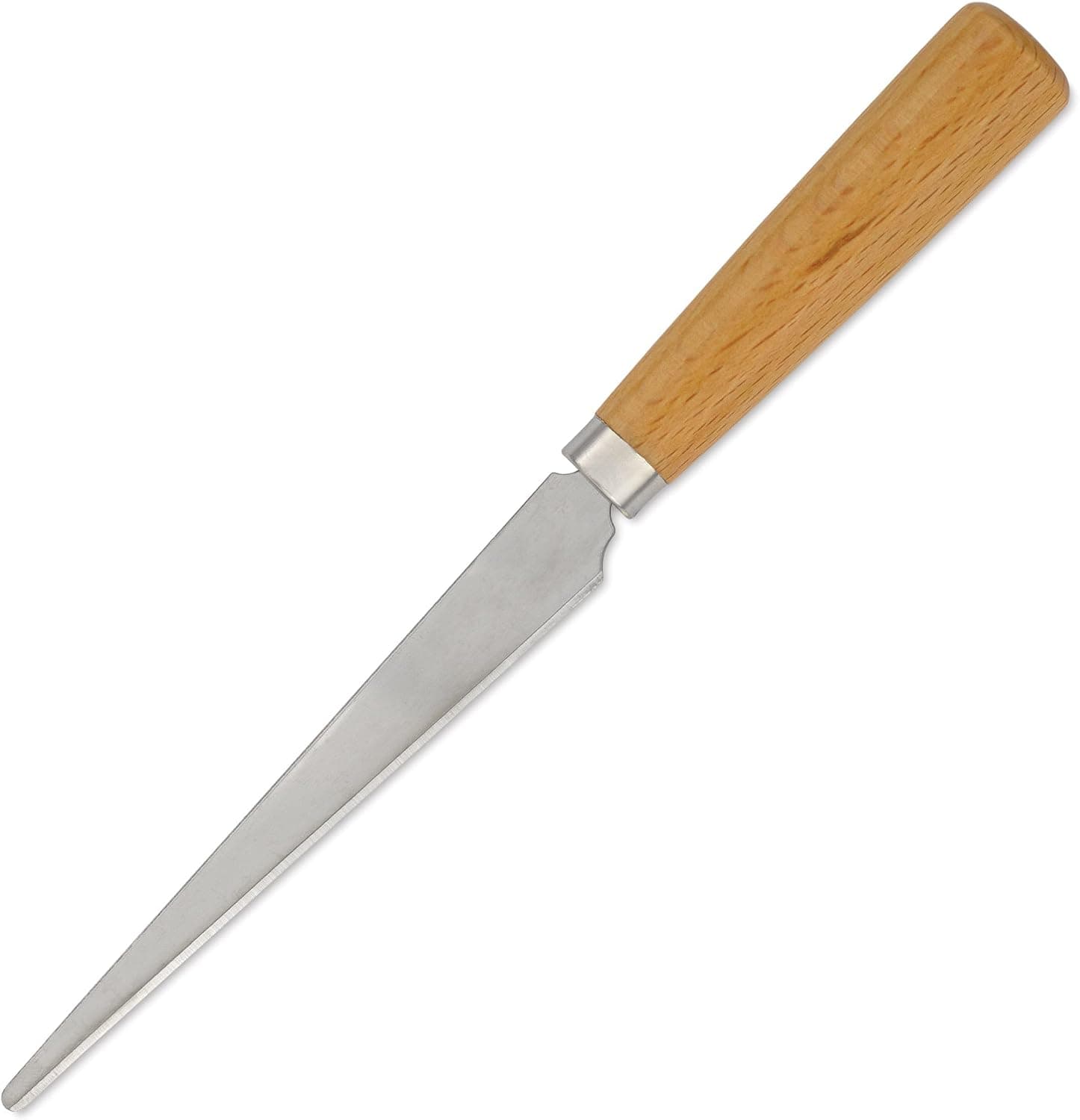
Kemper's F97-X fettling knife with hard tempered steel blade and wood handle for cutting and trimming clay.
Price range: $ (Budget)
What we liked
- + Hard tempered steel blade holds a sharp edge through firm clay
- + Kemper F97-X is a classic knife used in many pottery studios
- + Wood handle is comfortable and light for detailed cutting
Trade-offs
- - Carbon steel can rust if not dried after use
- - Stiff blade offers less flex than soft fettling knives
What a fettling knife is for
A fettling knife is one of the oldest tool shapes in pottery, used to trim mold seams, cut pour holes clean, and carve or slice through firm clay and greenware. Kemper's F97-X follows that classic pattern, a roughly 4.5 inch steel blade set into a wooden handle, small enough to fit a tool roll but rigid enough for real cutting work. It suits potters who want one dependable blade for cleanup and carving rather than a full set of specialty tools, and it is a common sight in studios precisely because the shape has not needed to change much. Anyone who exclusively hand builds soft, wet clay may get more use from a rib or wire tool, but for trimming firmer greenware this is the classic choice.
Hard tempered steel versus the softer F96
Kemper sells this knife in a harder tempered steel option, the F97-X, alongside a softer bladed version, the F96, and the difference is about feel and edge retention rather than shape. The hard tempered blade holds a sharper edge for longer, which matters when you are cutting through leather hard or firmer clay repeatedly across a session, but it also has less flex than the softer blade, so it does not bend and spring back the way a softer fettling knife does. Both versions keep the same overall knife profile and wood handle, so the choice mainly comes down to whether you value stiffness and edge life over a bit of give in the blade.
Using and caring for it in the studio
The wood handle keeps the knife light and comfortable for detail cutting sessions, and the compact size, around nine and a half inches long by roughly an inch tall, means it tucks easily into a tool bag or apron pocket between uses. Because the blade is carbon steel rather than stainless, it needs to be dried off after cleaning rather than left wet or set down in a puddle of slip, or it will start to rust at the edge over time. That small bit of upkeep is the price of a harder, sharper blade, and most potters simply wipe it down at the end of a session as part of normal studio cleanup, the same habit needed for most carbon steel pottery tools.
How it stacks up against other fettling knives
Compared with multi-piece fettling knife sets like HSOKEW's four piece wooden handle set or CDIYTOOL's similar four pack, the Kemper F97-X is a single, purpose built blade rather than a bundle of lighter weight options, and that focus shows in how it holds an edge through firmer clay. Sets like those give you more blade sizes for the price, useful if you want a small knife for detail work and a larger one for bigger cuts, but the individual blades tend to be softer and less durable over time. For a potter who wants one knife that will still be sharp seasons later rather than several that need replacing, the single hard tempered Kemper blade is the more durable route.
Verdict
As a single, well made fettling knife, the Kemper F97-X earns its our score of 9.1 out of 10 by doing exactly what a studio staple should, holding a sharp edge and cutting cleanly through firm clay session after session. It is not the right pick if you specifically want the flex of a softer blade, or if you want several blade sizes in one purchase rather than one knife. For most potters trimming mold seams, cutting pour holes, or carving greenware, though, this is a tool that earns a permanent spot in the tool bag.
Frequently asked questions
What is the difference between the Kemper F97-X and F96?
The F97-X uses a harder tempered steel blade that holds an edge longer, while the F96 is a softer, more flexible blade.
What size is the Kemper F97-X fettling knife?
It measures roughly 9.8 inches long, 2.7 inches wide, and 1 inch tall, small enough for a tool bag or apron pocket.
Will the blade rust?
The blade is carbon steel, so it can rust if left wet. Drying it after cleaning keeps the edge in good shape.
What is a fettling knife used for?
It is used to trim mold seams, cut pour holes, and carve or slice through leather hard and firmer clay.
Prices change often, so check the current price and availability on Amazon.
Check price on AmazonPottery Nest may earn a commission from the link above.